Living here · 6 min read
Getting a residence permit in Italy
Owning a home does not make you a resident. Two realistic routes, with numbers.
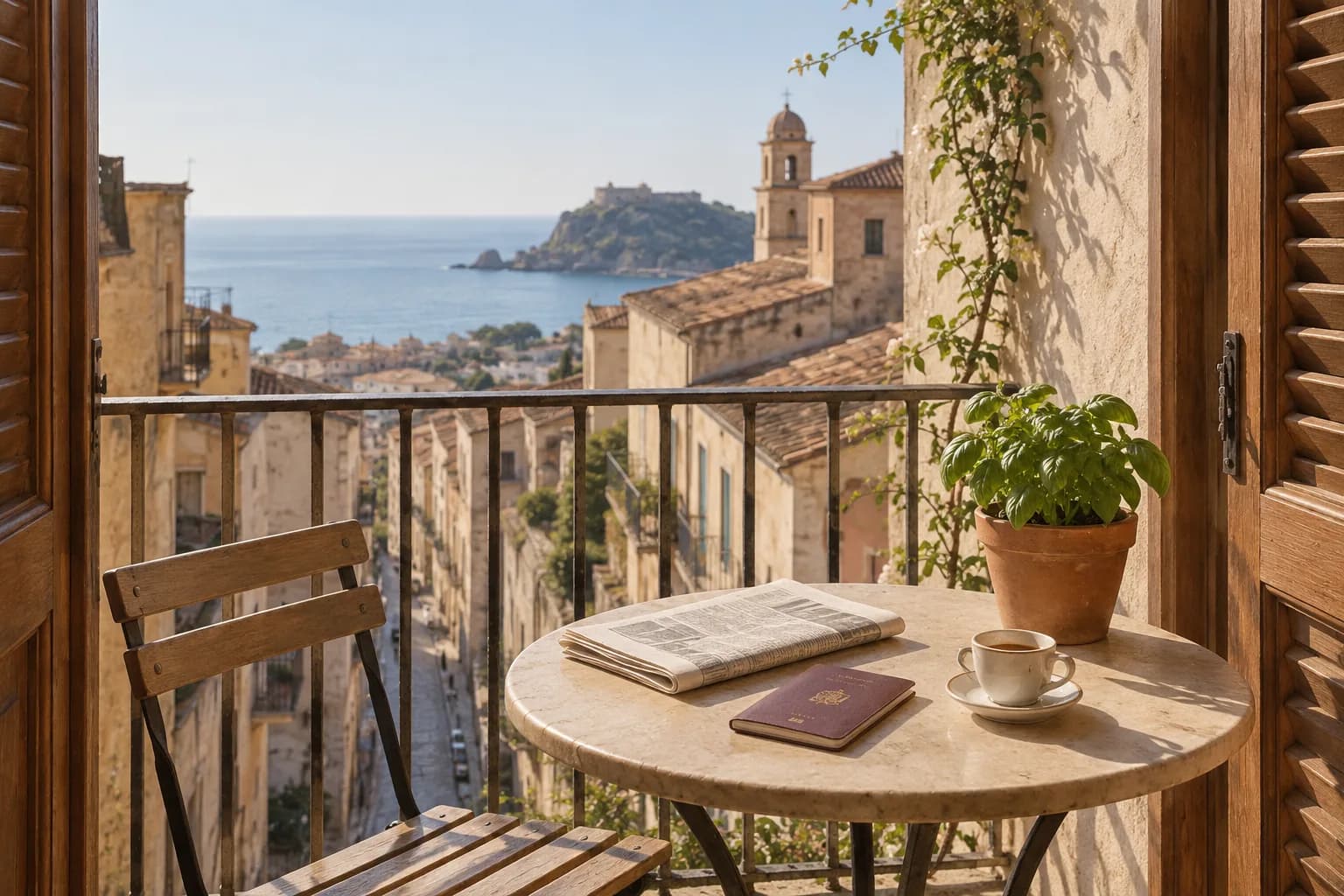
Buying property in Italy gives you a tourist visa: ninety days in any six months. A residence permit (permesso di soggiorno) is a separate process with its own criteria, and Italian immigration law is complex. Two routes are within reach of most people.
Elective residence
- —For people who can support themselves without working in Italy.
- —Minimum passive income of about €31,000 a year for one person: pensions, rent, dividends, funds. Salary does not count.
- —Documents: income proof, bank statements with translations, apostilled contracts, and a home you own or rent with a registered lease.
- —Some nationalities are examined more closely and must show that the income can actually be transferred.
Study
- —Enrolling at a university is often the simplest route. Permits are yearly and renew when you pass at least one exam.
- —Part-time work is allowed; after graduation the permit can convert to a work permit, or to self-employment with an income of about €8,500.
- —The University of Calabria charges around €700 a year for international students; scholarships and housing exist.
- —Twelve years of prior education are required; many master's programmes waive entrance exams for international applicants.
Time and odds
Applications take up to six months; the receipt lets you enter and stay meanwhile. The study route with conversion after graduation is close to certain; elective residence depends on income and paperwork, and gets harder with age.